English
 Español
 Português
 Русский
 Français
 日本語
日本語
 Deutsch
 Tiếng Việt
 Italiano
 Nederlands
 ไทย
ไทย
 Polski
 한국어
한국어
 Svenska
 Magyar
 Bahasa Melayu
 বাংলা
বাংলা
 Dansk
Dansk
 Suomi
Suomi
 हिन्दी
 Filipino
 Türkçe
 Gaeilge
 العربية
 Bahasa Indonesia
 Norsk
Norsk
 اردو
اردو
 Čeština
 Ελληνικά
 Українська
 Basa Jawa
 فارسی
فارسی
 தமிழ்
தமிழ்
 తెలుగు
 नेपाली
 မြန်မာ
 Български
 ລາວ
ລາວ
 Latina
 Қазақша
 Euskera
 Azərbaycan
 Slovenčina
 Македонски
 Lietuvių
 Eesti
Eesti
 Română
 Slovenščina


Home
>
News
>
Industry News
>
The "Freshness Code" Of Refrigerator Storage Boxes: How To Double The Shelf Life Of Your Food?
The "Freshness Code" Of Refrigerator Storage Boxes: How To Double The Shelf Life Of Your Food?
2025/12/02
Modern refrigerator storage boxes are the "smart modules" designed to solve this dilemma by proactively managing the fridge's interior environment. They are not merely for organization but represent a systematic solution grounded in food preservation science. By creating isolated micro-environments, optimizing spatial layout, and promoting healthier habits, a well-chosen set of storage boxes can truly extend the freshness of common ingredients by two times or more. Let's decode this "Freshness Code" and explore how these organizational tools become powerful allies in guarding your food's vitality.
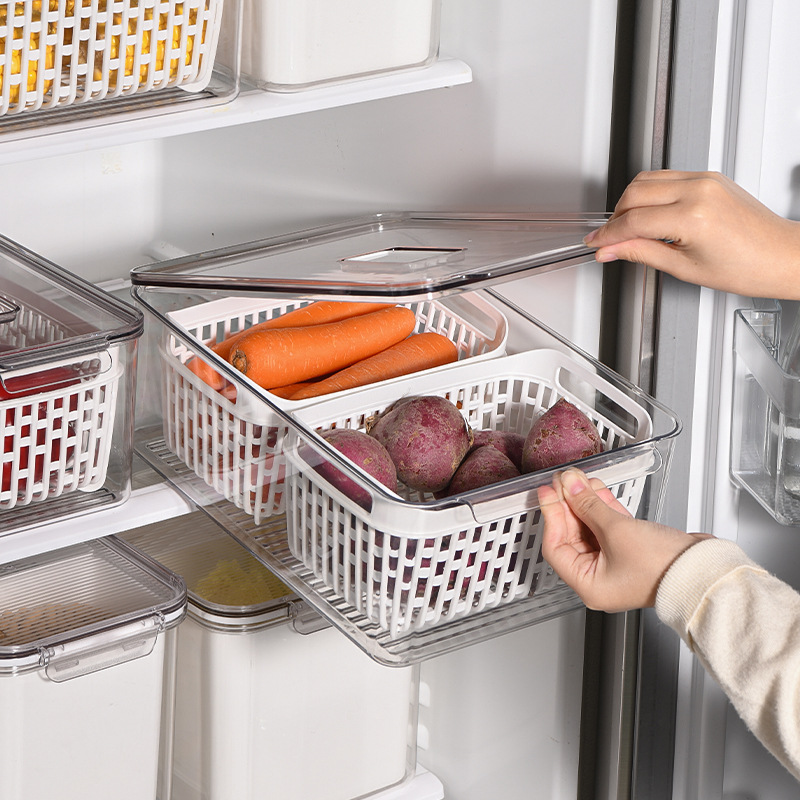
Code 1: Isolation & Independence — Creating a "Private Suite" for Your Food
The primary culprits behind food spoilage and flavor mingling in the fridge are the free movement of air, moisture, and microorganisms. Ordinary storage allows unchecked contact, whereas quality storage boxes create a physical barrier, establishing an independent "mini preservation chamber" for each type of food.
Absolute Sealing, Locking in Moisture & Flavor: For cooked foods, sauces, cut fruits, or leafy greens prone to dehydration, the Lidded Airtight Refrigerator Storage Container is paramount. Its effectiveness hinges on the lid's sealing mechanism. High-quality versions utilize food-grade silicone gaskets combined with secure lock designs, effectively preventing internal moisture evaporation to maintain texture while blocking the passage of odor molecules. For instance, storing cut onions or mangoes in such a container ensures their strong aromas won't permeate the entire fridge.
Targeted Isolation, Neutralizing Cross-Contamination: Some items require not just sealing but specialized handling. The Kimchi Storage Container is a prime example. It typically features a specialized valve or sealing technology that allows the gradual release of gases produced during fermentation (preventing container rupture) while blocking significant air intake. This enables kimchi to continue fermenting slowly at cool temperatures without spoiling, powerfully containing its distinct fermented scent without disturbing other items.
Soft Separation, Balancing Ventilation & Protection: Not all foods require a "vacuum-sealed" environment. Items like strawberries, mushrooms, and delicate greens can suffer from excess condensation and mold if sealed too tightly. Here, the Refrigerator Storage Box with Soft Lid or a Multi-Function Fully Clear Refrigerator Organizer (often with a non-hermetic lid) proves ideal. They protect against physical damage from crushing, block most circulating fridge odors, and allow for some gas exchange to prevent moisture buildup—a smart choice for produce preservation.
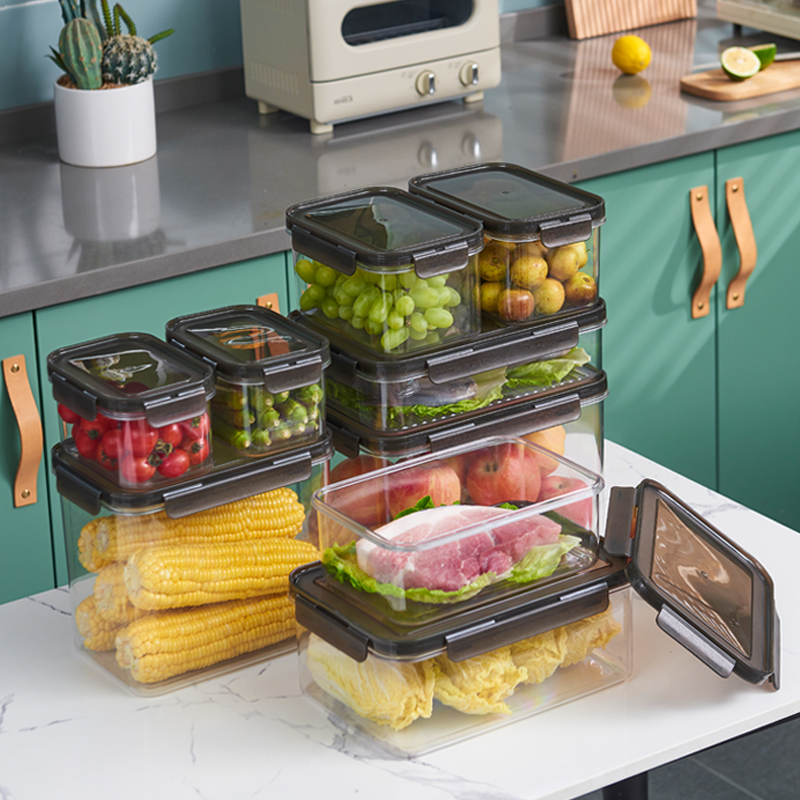
Code 2: Dryness & Drainage — Suppressing the Threat of Mold
Liquid moisture is a breeding ground for bacteria and mold. Many ingredients spoil not due to temperature but because of lingering surface moisture. Actively managing water is the second key to extending freshness.
Dry-Wet Separation, Keeping Surfaces Dry: This is where the Multi-Compartment Refrigerator Storage Box with Handle or specially designed Slide-Out Refrigerator Storage Drawers excel. When storing washed fruits, vegetables, or cooked foods, placing a paper towel at the bottom effectively absorbs excess water and moisture from the food's respiration, keeping the contact surface dry. For seafood or raw meat, patting it dry before refrigerating in a storage box can significantly improve preservation.
Designed for Damp Ingredients: A more advanced solution involves using boxes with integrated or separate drainage racks at the base. This design physically separates food from any pooled water, achieving dry-wet partitioning through structure. It is particularly suited for storing pre-washed salad greens or berries, noticeably slowing down wilting and decay.
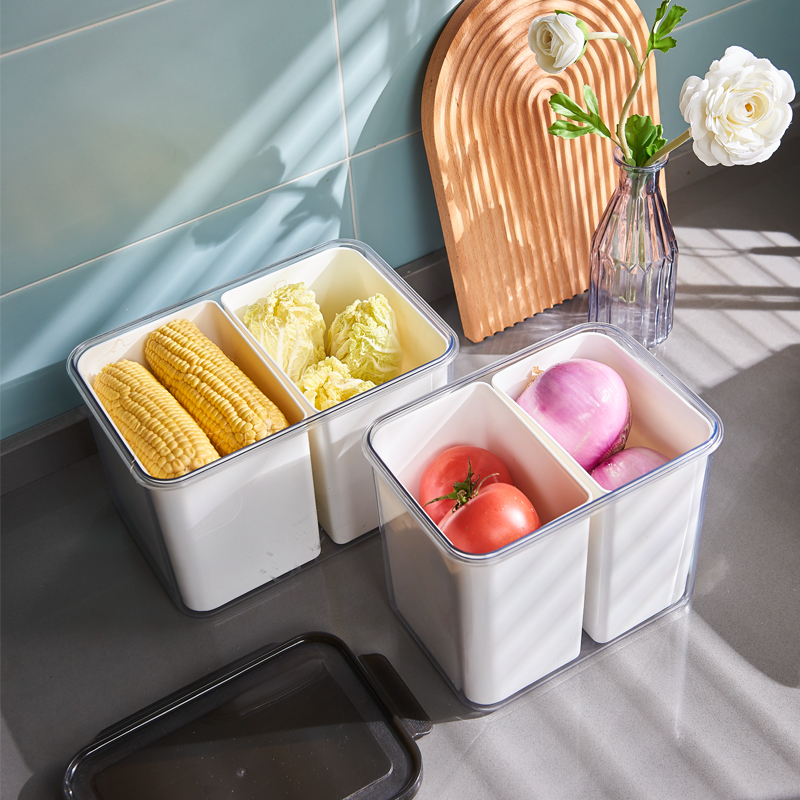
Code 3: Zoning & Visibility — Enabling Precise Inventory Management
Chaos leads to forgetfulness, and forgetfulness directly causes waste. Scientific organization ensures every ingredient has a fixed, visible "home." This promotes not just tidiness but also the efficient practice of the "first-in, first-out" principle, preventing items from expiring unnoticed in the back.
Crystal-Clear Visibility, Banishing Forgetfulness: The Multi-Function Fully Clear Refrigerator Organizer and Slide-Out Refrigerator Storage Drawers shine here. Fully or partially transparent bodies allow you to survey contents at a glance without opening them, enabling quick location of needed items. This avoids disrupting other foods during searches and prevents waste from overlooked, expired products.
Precisely divided and neatly organized: This multi-compartment refrigerator storage box with handles is a model of effective food organization. It neatly stores various ingredients—such as breakfast ham, cheese, nuts, or pre-cut vegetables—in one unit. This not only maximizes space utilization but also physically separates raw and cooked foods or different types of food, preventing cross-contamination. Furthermore, it allows for easy access as needed and minimizes temperature fluctuations caused by repeatedly opening the main container.
Visual Time Tracking, Smart Reminders: The Time-Tracking Fridge Organizer elevates inventory management to an intelligent level. A simple turn of the dial timer on the box when storing leftovers, cooked foods, or soon-to-expire ingredients provides a clear visual cue for consumption deadlines. This straightforward feature effectively encourages household awareness of food freshness, serving as a final, considerable line of defense against waste and for food safety.
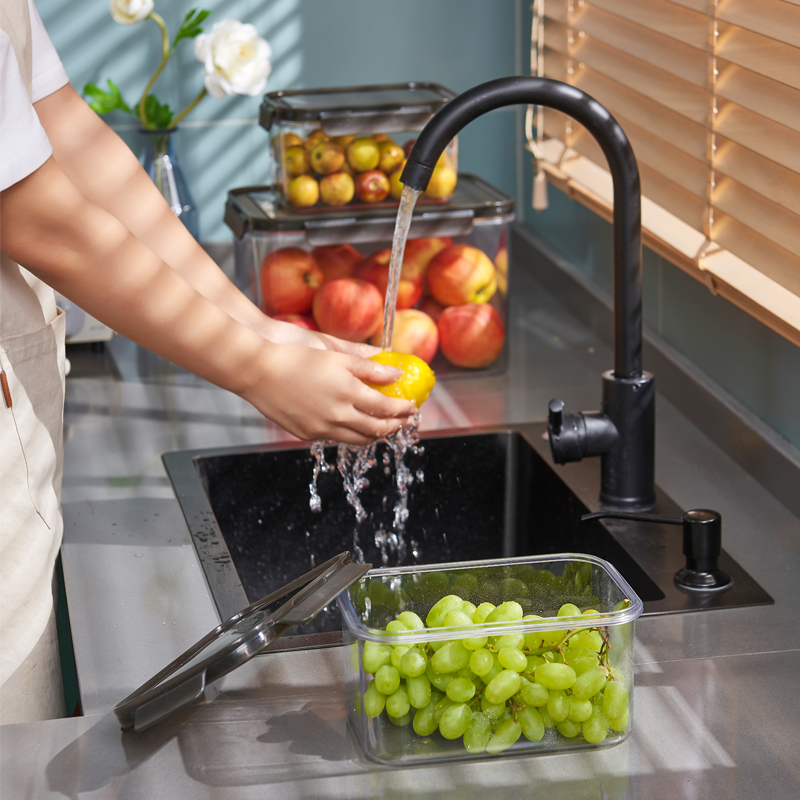
Code 4: Space & Airflow — Optimizing Your Fridge's Circulation
A refrigerator's cooling efficiency depends on uniform circulation of cold air. Clutter and blocked plastic bags severely obstruct this airflow, leading to significant temperature variations in different zones and placing some food outside the ideal preservation temperature.
Vertical Expansion, Freeing Air Channels: Utilizing Side-Door Mounted Refrigerator Compartment Organizers and stackable boxes to relocate small, loose items (like cans, small condiment packets, drinks) away from the main storage areas creates a more regular and open space on shelves and in drawers. Cold air can then flow smoothly, ensuring temperature uniformity so all items reside at their proper cool temperature.
Easy Access, Minimizing Cold Loss: Designs with Carry Handles (like the Multi-Compartment Box with Handle or Outdoor Fridge Storage Container with Carry Handle) and Slide-Out Refrigerator Storage Drawers allow you to easily remove the entire container, access contents, and return it intact. This avoids holding the fridge door open for extended periods or rummaging inside to find one item, greatly reducing cold air loss and temperature spikes to maintain a stable internal environment.
Specialized Scenarios, Enhanced Performance: Products like the Outdoor Fridge Storage Container with Carry Handle are designed for portability, durability, and insulation. While ideal for outings, they are also excellent for in-fridge storage of temperature-sensitive items or meals meant for transport (like well-prepared lunch boxes or picnic fare). Their superior insulating properties provide an extra layer of protection against temperature fluctuations during frequent fridge access.
Building Your Freshness System: A Guide to Combining Storage Box Types
Now that we understand the Freshness Codes, how do you select and combine these boxes for the various foods in your home? The following guide provides recommendations:
| Food Category / Preservation Need | Core Challenge | Recommended Storage Box Type | Key Usage Tips & Combination Advice |
| Cooked Foods, Leftovers, Odor-Prone Items | Prevent moisture loss, isolate odors, avoid contamination. | Lidded Airtight Refrigerator Storage Container, Kimchi Storage Container (for fermented items). | Ensure food is completely cooled before sealing. Use a Time-Tracking Fridge Organizer to mark the storage date. |
| Fresh Produce (Leafy Greens, Berries, etc.) | Avoid crushing, control humidity, prevent rapid dehydration or mold. | Refrigerator Storage Box with Soft Lid, Multi-Function Fully Clear Refrigerator Organizer, boxes with drainage function. | Place a paper towel inside to absorb excess moisture. Avoid storing washed items unless they are thoroughly dried. |
| Raw Meat, Seafood (Short-term fridge storage) | Prevent drip contamination, isolate raw smells. | Lidded Airtight Refrigerator Storage Container (prefer deeper models). | Pat surfaces dry with a paper towel before storing. Place on a lower shelf to prevent drips onto other foods. |
| Breakfast Items, Meal Prep Ingredients | Variety of types, small quantities, needs fine partitioning. | Multi-Compartment Refrigerator Storage Box with Handle. | Portion for single servings/meals for efficient, one-time retrieval. |
| Condiment Packets, Small Beverages | Creates clutter, prone to rolling, wastes door shelf space. | Side-Door Mounted Refrigerator Compartment Organizer, Slide-Out Refrigerator Storage Drawer. | Maximize vertical space for a tidier interior and improved air circulation. |
| Frequently Accessed Ingredients | Reduce door-open time, facilitate easy retrieval. | Any design with a Carry Handle, Slide-Out Refrigerator Storage Drawer. | Position these at easy-to-see, mid-to-upper levels in the fridge for maximum efficiency. |
In summary, transforming your refrigerator from a passive "cold closet" into an active "freshness management space" centers on using these scientifically designed storage boxes to systematically build an environment that is isolating, dry, orderly, and efficient. When each food item is properly housed in its optimal micro-environment, doubling its shelf life ceases to be a marketing slogan and becomes an achievable, intelligent daily practice for any household. Investing in a good organizational system is an investment not only in kitchen tidiness but also in the value of your food, your family's health, and a more sustainable lifestyle.
-
E-mail
-
Call Us
+86-17858251051
-
Address
No. 133 Huangjiao Road, Huangyan District, Taizhou City, Zhejiang Province
Inquiry For Price List
Offers excellent, comprehensive customer service every step of the way. Before you order, make real time inquiries through...